

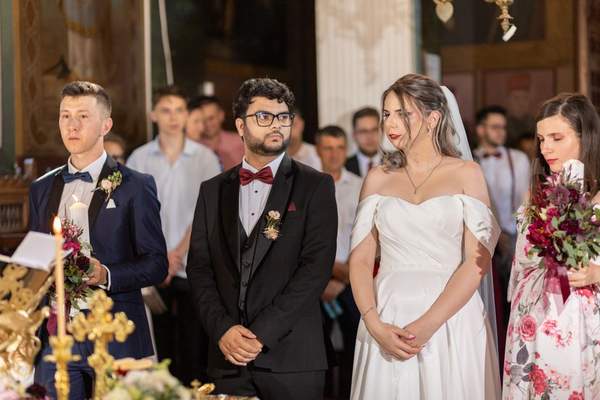
A church wedding is both a celebration and a gathering in a place of worship. That combination makes choosing an outfit slightly different from dressing for a hotel ballroom or garden party. The best church wedding guest attire respects the couple’s requested dress code while considering the ceremony’s religious setting. Fortunately, looking thoughtful doesn’t require buying an entirely new outfit. A flattering dress, tailored separates, or a suit can work beautifully with a few practical adjustments.
Check the Invitation and the Church’s Expectations
Begin with the invitation. Cocktail usually calls for a polished midi dress, dressy jumpsuit, elegant separates, or suit. Formal weddings are more elevated, while casual weddings still deserve neat, intentional clothing. Follow any guidance about colors, cultural customs, or specific attire.
Next, consider the church itself. A Catholic cathedral, an Orthodox parish, and a neighborhood Protestant church may have different traditions. Some venues publish detailed clothing guidelines; others leave attire to guests’ judgment. There is no universal church wedding dress code covering every congregation in the United States. When possible, check the church’s wedding page or ask the wedding party about specific restrictions.
Choose Coverage That Looks Intentional
Shoulders and Necklines
Sleeves, a moderate neckline, and a well-fitted bodice are dependable options. Sleeveless dresses are welcome in some congregations but may need an extra layer in others. A cropped jacket, lightweight cardigan, or coordinated wrap can make a reception outfit suitable for a traditional ceremony.
Make sure the layer stays on while you sit and stand. A shawl that slides off every few minutes can become distracting. Some Catholic parishes specifically request covered shoulders, so checking the local policy is more reliable than relying on general fashion advice.
Lengths and Fit
Knee-length, midi, and longer skirts are sensible starting points for a modest wedding guest outfit. Test the outfit while sitting: a hem that looks comfortable standing may rise noticeably on a pew. Also check that a slit does not open more than expected and that fitted clothing allows easy movement. These checks matter especially during services involving repeated standing and sitting.
Church Wedding Outfit Ideas
Dresses and Skirts
For a spring afternoon, consider a short-sleeved floral midi dress with dress flats and a small handbag. For an evening event, a deep-blue or burgundy crepe dress with a matching jacket feels polished. A blouse with a flowing midi skirt is another elegant choice when you prefer separates. Fabrics with some structure often look dressier without relying on revealing cuts.
Have a sleeveless dress you already love? Add a simple bolero for the ceremony and remove it for the reception if appropriate. That is often more practical than purchasing two outfits. If the invitation says cocktail, review options for cocktail wedding guest attire before selecting the final accessories.
Suits and Tailored Separates
A well-fitted suit and collared shirt work for most formal church weddings. For semi-formal daytime celebrations, tailored trousers, a dress shirt, and blazer can be enough. A tie depends on the invitation and local expectations. Choose polished fabrics and clean lines over distressed jeans, graphic shirts, or athletic clothing. Respectful wedding clothing is about the occasion, not about prescribing gender-specific outfits.
Pick Practical Shoes and Understated Accessories
Long aisles, steps, and smooth stone floors can make uncomfortable shoes a problem. Block heels, dress flats, loafers, and smart dress shoes are often better choices than very high heels. If the reception is on grass, consider footwear that will not sink into the ground.
Accessories should complement rather than compete with the ceremony. A small handbag is easier to manage in a pew than a large tote. Avoid hats so wide they block someone’s view, and keep noisy jewelry to a minimum. Head coverings may be customary in particular communities, but guests should not assume they are mandatory everywhere. Ask when you’re uncertain.
What If the Ceremony and Reception Have Different Vibes?
Imagine attending a 2 p.m. Catholic church ceremony followed by a 6 p.m. reception at a downtown hotel. You own a sleeveless, calf-length navy dress that fits the invitation’s cocktail request. Pair it with a tailored jacket during the service, then remove the jacket at the hotel. You have one cohesive outfit that adapts to both venues.
The same idea works in colder months. A coat handles the journey outside, but a lighter layer may be more comfortable in a heated sanctuary. Ideas for what to wear to a winter wedding can help you coordinate warmth and formality without overpacking.
Common Mistakes Worth Avoiding
A revealing party dress with large cutouts, a very high slit, or a plunging neckline may feel out of place in a traditional service. Clothing that needs frequent tugging or readjusting is another warning sign. Choose something comfortable enough to sit through the ceremony without thinking about it.
Unless requested by the couple, avoid white or bridal-looking ivory outfits. Don’t assume that “casual” means flip-flops or gym clothes, either. At the same time, a tasteful exposed shoulder is not automatically a violation: the congregation’s specific customs matter more than blanket rules found online.
When and How to Ask About Attire
Check the wedding website and church guidance before contacting anyone. If your question remains unanswered, ask the couple’s designated contact or the venue office something specific: “Are sleeveless dresses suitable for the ceremony, or should guests bring a jacket?” That is easier to answer than asking what everyone should wear.
If guidance remains unclear, a slightly more covered outfit is a flexible choice. You can adapt it for the reception without appearing overdressed in the sanctuary. For a daytime event, comparing semi-formal wedding guest outfits may also help you decide how dressy to go.
Final Thoughts
Church ceremony attire should feel festive, comfortable, and considerate of the setting. Start with the invitation, confirm any church-specific requirements, and think about how your outfit behaves while seated. A suitable hemline, polished footwear, and removable layer are usually more helpful than a long list of rigid fashion rules.
Frequently Asked Questions
Can I wear a sleeveless dress to a church wedding?
Often, yes, but some churches request covered shoulders. A cardigan, jacket, or wrap provides an easy option when the rules are unclear.
Do I need a floor-length dress for a church wedding?
Not generally. Knee-length and midi dresses are widely practical options. Follow the invitation’s formality and any specific venue instructions.
Is black appropriate for a church wedding?
Black is accepted at many American weddings, especially evening celebrations. Style it with festive accessories, while respecting any preferences communicated by the couple.
Can guests wear jeans to a casual church ceremony?
Tailored trousers, skirts, and simple dresses are safer choices. Wear jeans only when the couple explicitly welcomes them, and choose a clean, presentable pair.