

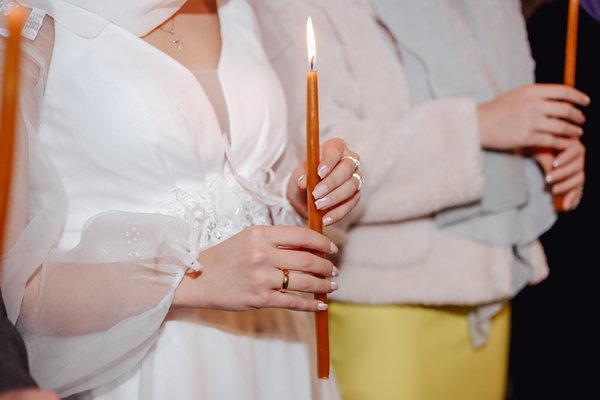
A unity candle ceremony can be one of the quietest moments in a wedding, yet it raises surprisingly practical questions. When should the candles be lit? Do parents participate? What should the officiant say? With a little planning, this classic ritual feels personal rather than like an extra task squeezed into the service.
The basic idea is simple: two smaller flames light one central candle, representing two people choosing a shared future. There is no single required script or placement. The best version suits the couple, the venue, and the tone of the wedding.
What Does a Unity Candle Ceremony Symbolize?
In a traditional unity candle wedding, each partner takes a lit taper candle and together lights a larger pillar candle. The separate flames represent two individual lives; the new flame represents their partnership. The ritual can also acknowledge the families and experiences that helped shape those lives.
Unity does not have to mean giving up individuality. Some couples leave both taper candles burning afterward to express that each person remains whole within the marriage. Others extinguish them to mark a new chapter. Neither choice is more correct, so agree on its meaning before the ceremony.
Where Does the Candle Lighting Fit in the Wedding Order?
The unity candle ceremony often works well after the vows and exchange of rings but before the officiant’s final pronouncement. It creates a natural transition from spoken commitments to a visible symbol of them.
For example, a sequence might be vows, rings, a short introduction, candle lighting, then the pronouncement and recessional. Another couple might prefer the ritual after a reading or during music. Compare the placement with your wedding ceremony order so guests are not repeatedly standing, sitting, and turning around.
Allow roughly two to four minutes, depending on the wording, music, and distance to the candle table. Include the movement in your rehearsal, especially if the ceremony space is narrow.
How the Unity Candle Ritual Works, Step by Step
Prepare the candles
Place one central pillar candle between two smaller taper candles on a stable, heat-resistant surface, away from fabric and flowers. The tapers can be pre-lit shortly before the ritual, or a designated person can light them when needed.
Introduce the meaning
The officiant briefly explains what the flames signify. A sentence or two is usually enough. The couple then walks to the table, ideally without obstructing guests’ view.
Light the central candle together
Each partner lifts a taper, brings its flame to the central wick, and holds it until the pillar candle catches. Confirm that it is burning before moving the tapers away. Leave the side candles lit or extinguish them according to your chosen symbolism.
Return to the ceremony
The officiant offers a closing line, and the couple returns to their places. A short instrumental piece can accompany the movement, but silence also works. Practise with the actual holders: a tall pillar wick can be harder to reach than expected.
Who Can Participate in the Candle Lighting?
Usually, the two people getting married light the central candle. Parents or other significant relatives may light the individual tapers earlier to recognise the families from which the couple comes. This is optional, not a universal requirement.
Blended families sometimes include children, but open flames should remain in adult hands. Children can stand beside the couple, offer a reading, or select the music instead. If family relationships are complicated, nobody needs a ceremonial role simply because a sample script includes one.
For a nonreligious service, this wedding candle ritual can focus entirely on partnership. Faith-based ceremonies may have rules or preferences; check with your officiant or place of worship before assuming it is permitted.
Unity Candle Wording: Three Officiant Examples
Simple and contemporary
“These two flames represent the separate paths that brought you here. As you light this candle together, may it remind you that marriage is a shared commitment made by two distinct people. May you bring warmth, patience, and care to the life you build.”
Family-centred
“The candles beside you honour the people and experiences that helped you become who you are. Today, you carry that love forward as you begin a new family story. May this shared light remind you that support and belonging can grow without replacing what came before.”
Short wording for a quiet moment
“With these two lights, you kindle one flame. May it remind you of the promises you have made and the care you will choose, day after day.”
Choose unity candle wording that matches the rest of the service. If the vows are warm and informal, an elaborate speech may feel out of place. Wedding vow examples can help you keep language consistent without repeating the promises word for word.
Practical Details That Make the Moment Work
Open flames are the biggest logistical consideration. Confirm the venue’s rules, especially in historic buildings, indoor spaces with fire restrictions, and outdoor settings where wind may extinguish a wick. Keep a long-reach lighter available, with one adult responsible for it.
For an outdoor wedding, glass hurricane shades can help if the arrangement remains accessible and the venue approves it. Battery-operated candles are safer in some settings, but most cannot transfer a flame. If using LEDs, adapt the candle lighting ceremony so the couple switches on a shared light rather than pretending to ignite it.
Think about sightlines, too. A table far behind the couple means guests see their backs. A low table to one side, within a few steps, often works better. If open flames are impractical, consider other unity ceremony ideas before committing to a setup the space cannot support safely.
Frequently Asked Questions
Do you light a unity candle before or after the vows?
Many couples place it after the vows and rings, but there is no fixed order. Choose the point that feels natural and confirm the sequence with your officiant.
Do the individual candles stay lit afterward?
They can. Leaving them lit may symbolise retained individuality; extinguishing them can represent a new shared life. The meaning comes from the couple, not an assumed rule.
Can you have a unity candle at an outdoor wedding?
Yes, if the venue permits flames and conditions are suitable. Wind protection and a backup plan are essential. In some locations, a different ritual will be more dependable.
Is a unity candle ceremony religious?
Not necessarily. Some couples include spiritual language or family traditions, while others choose secular wording. Ask your officiant about restrictions in your particular ceremony setting.
A Small Ritual With a Clear Purpose
The strongest unity candle ceremonies are simple, visible, and intentional. Decide what the flames mean, place the ritual where it flows naturally, and rehearse the actual lighting. When logistics fade into the background, guests can focus on the point: two people making their commitment tangible for a moment.