

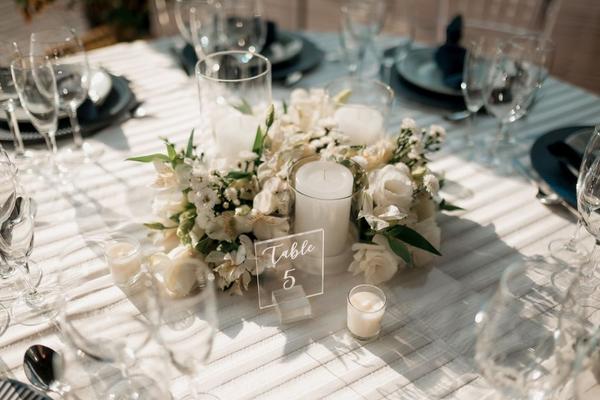
The right centerpiece does more than decorate a table. It sets the mood of the reception without competing with dinner, conversation, or the room itself. The most useful wedding table centerpiece ideas balance beauty with practical details: guests should be able to see one another, servers need room to work, and flowers or candles should suit the venue.
Start with your table shape and the atmosphere you want. A romantic garden arrangement may feel perfect on a round table, while a long banquet table often looks better with several smaller arrangements repeating down its length. The ideas below can be adapted for intimate celebrations or large receptions without treating every table exactly alike.
Match the centerpiece to the table
Round guest tables
A single focal arrangement usually gives a round table a clear center. Keep the arrangement low enough for conversation, or use a tall design with an open, slender base so the flowers sit above guests’ sightlines. Leave enough space around it for place settings, shared dishes, and glassware.
Long banquet tables
Instead of one oversized display, repeat bud vases, small arrangements, or candle clusters along the table. A loose rhythm feels more welcoming than a continuous wall of flowers. If food will be served family-style, confirm exactly where platters will go before committing to a runner of greenery.
Square and narrow tables
Square tables suit compact, balanced pieces such as a low bowl or grouped vessels. Narrow tables need restraint: a few slim bud vases can make more sense than a wide floral wedding centerpiece that pushes plates toward the edge.
Wedding centerpiece styles worth considering
Loose garden flowers for romantic receptions
Choose seasonal blooms with varied petal shapes, then add a little trailing foliage for movement. A low compote bowl gives a garden-style arrangement room to spread without hiding the people across the table. Use the ceremony’s flower palette as a starting point, but allow the reception arrangements to be less formal.
Bud vases for a relaxed, personal look
Group three to five small vases with individual stems in different heights. These wedding centerpieces work especially well for restaurant receptions and long tables because they can be moved when food arrives. Matching glass makes the display feel tidy; collected vintage vessels give it a more eclectic character.
Grouped candles for understated elegance
For candle centerpiece ideas, mix the visual heights of enclosed votives, sturdy pillars, or tapers in suitable holders. Keep the grouping intentional rather than scattering candles everywhere. Check the venue’s flame policy first; flameless candles can create a similar glow where open flames are prohibited.
Greenery and herbs for organic tables
Small pots of rosemary, olive branches, or neatly arranged foliage suit rustic, Mediterranean, and outdoor-inspired settings. Potted herbs offer texture without requiring a large volume of cut flowers. Avoid strongly scented plants immediately beside meals, and protect linens from damp pots.
Single-branch arrangements for modern spaces
A sculptural branch in a stable, narrow vessel can look striking in a gallery, loft, or minimalist venue. The negative space is part of the design, so resist adding filler flowers. Check ceiling height, stability, and how far the branches extend into neighboring seats before using this approach.
Fruit and flowers for colorful tablescapes
Clusters of citrus, grapes, or seasonal fruit can add rich color beside a few compact blooms. This works beautifully for summer weddings and warm, Mediterranean-inspired receptions. Place fruit on clean trays or bowls rather than directly on the linen, and check whether the venue allows edible decorations.
Low ceramic bowls for timeless simplicity
Shallow stoneware or ceramic bowls filled with flowers, foliage, or floating decorations offer a calm focal point. They pair naturally with linen napkins and simple dinnerware. For water-filled pieces, use stable, shallow vessels and confirm that venue staff are comfortable setting them up.
Lanterns for rustic or evening celebrations
One lantern surrounded by a small amount of foliage can make a convincing centerpiece without expensive florals. Choose a lantern sized to the table rather than the aisle. At outdoor receptions, secure lightweight accessories and use battery-powered lighting where wind makes real candles impractical.
Protect sightlines and serving space
Height matters more than many couples expect. A beautiful arrangement becomes frustrating if guests must lean around it to talk. Before ordering reception table centerpieces, build a sample using the actual table dimensions and similar chairs. Sit opposite another person, place dinner plates and glasses on the table, and check what blocks your view.
For tall designs, focus on airy upper arrangements and slim stands rather than dense flowers at face level. Ask the florist or rental team how the base will be weighted, especially outdoors. Nothing should wobble when a guest brushes the table.
Make the budget work harder
Instead of buying identical statement arrangements for every table, vary the emphasis. A head table might have fuller flowers, while guest tables alternate between bud vases and candles using the same color palette. The repetition ties the room together without making each centerpiece equally costly.
Ask for itemized quotes covering flowers, vessels, rentals, delivery, setup, removal, and breakage. Seasonal flower availability changes by region and date, so let the florist suggest substitutes with a similar silhouette. A guide to seasonal wedding flowers can help narrow choices, while a wedding color palette plan keeps mixed arrangements cohesive.
For a practical test, lay out one complete guest table before the wedding. Photograph it from a standing view and from a seated guest’s view. You may discover that removing just two vases creates space for bread baskets without losing the overall effect. A reception table setting checklist is useful for this final rehearsal.
Frequently asked questions
How high should wedding table centerpieces be?
There is no universal ideal measurement. Low arrangements should sit comfortably below seated guests’ lines of sight, while tall displays should have open space at eye level. Test the design with your actual chairs and table settings rather than relying on a height rule alone.
Can wedding centerpieces be different on each table?
Yes. Varying flowers, vessels, or candles often makes the room feel more collected and interesting. Keep a common element, such as color, material, or arrangement shape, so the different tables still look connected.
What are affordable alternatives to large floral arrangements?
Bud vases, greenery in small pots, grouped candleholders, and rented lanterns can reduce the amount of floral material required. Compare total setup and rental costs, not just the purchase price of each decorative item.
Are candles suitable for outdoor reception tables?
They can be, but wind, venue rules, and fire safety affect the choice. Stable hurricane-style enclosures or flameless options are usually more practical than exposed tapers. Keep flame and heat away from foliage, fabric, and guests.
Let the room guide the final choice
The strongest wedding table centerpiece ideas feel connected to the reception rather than copied from a photograph. Choose a few materials you love, adapt their scale to each table, and check them in a realistic place setting. When guests can talk easily and the tables still look lovely from across the room, the design is doing its job.